What is electrolysis?
Generally speaking, electrolysis is the usage of electricity to separate chemicals. For the application of hair removal, the specific electrolysis done inside a hair follicle creates tiny amounts of sodium hydroxide, or lye, which permanently kills the hair-growing cells in the follicle. The term "electrolysis" is also used these days to refer to flash thermolysis, which uses radio waves to intensely heat the inside of the follicle to damage the hair-growing cells. The blend technique refers to combining electricity to produce lye, with a lower level of heat than flash. The blend technique may reduce the amount of discomfort felt during treatment, as well as work faster than pure electrolysis.
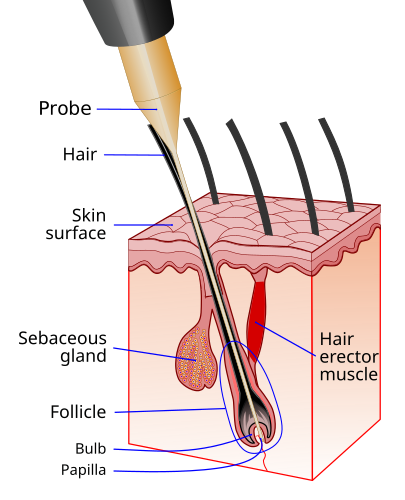
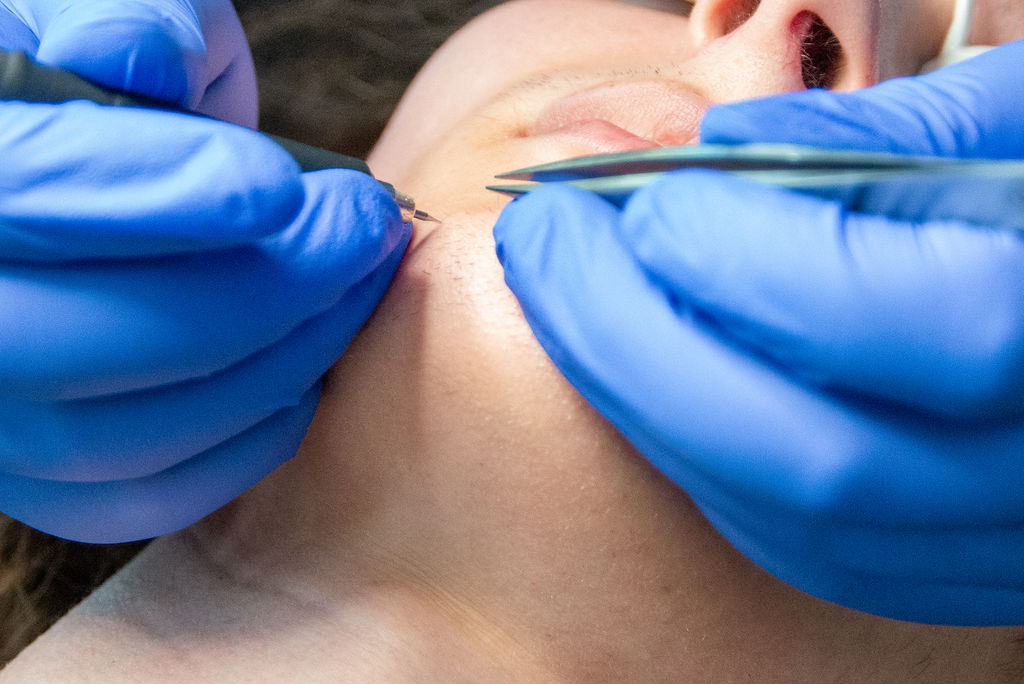
When performing electrolysis to remove a hair, your technician will insert a probe or filament alongside the hair, and to the bottom of your hair follicle, as seen in the diagram. Once the probe is inserted, the technician will apply an electric current for enough time to produce enough lye to fully damage the hair-growing cells along the follicle walls and the root of the hair.
Electricity is often thought of as a powerful, dangerous force, but the amount of electricity used in electrolysis for hair removal is 1/100 the level that will start to cause health issues, and 1/10,000 the level that will cause lasting damage. When done by a qualified and licensed professional, with up-to-date equipment, electrolysis as a method of hair removal is perfectly safe.
Who gets electrolysis?
Anyone can desire hair removal for any reason, but for some people, having smooth hairless skin is an absolute priority.
People usually turn to electrolysis for hair removal when laser is ineffective or advised against (for darker skin or coarser hair), for alleviation of gender dysphoria or body dysmorphia, in preparation for various surgical procedures that need hair-free skin, or for PMOS/PCOS. Body hair removal in general is also commonly sought-after.
How long does it take?
A typical electrolysis session will be 30-120 minutes for the removal of untreated or particularly hairy areas. Surgery preparation appointments can be up to 4 hours. Maintenance/cleanup sessions for finer hairs tend to be 15-60 minutes, depending on how much hair needs to be treated.
Due to the pace of the hair growth cycle, completely and permanently removing hair from any given area will occur over the span of at least a year. Surgical area preparation typically takes at least 3 years.
Weekly appointments are recommended until all hairs have been treated and weakened, after which maintenance and cleanup sessions should be done every few weeks. There is no guarantee of a final timeline, because everyone's hair growth patterns are different. Over time and repeated sessions, you will find that the hair completely stops growing back. Before you are permanently and fully cleared, you should notice that hair regrowth starts to become lighter and finer.